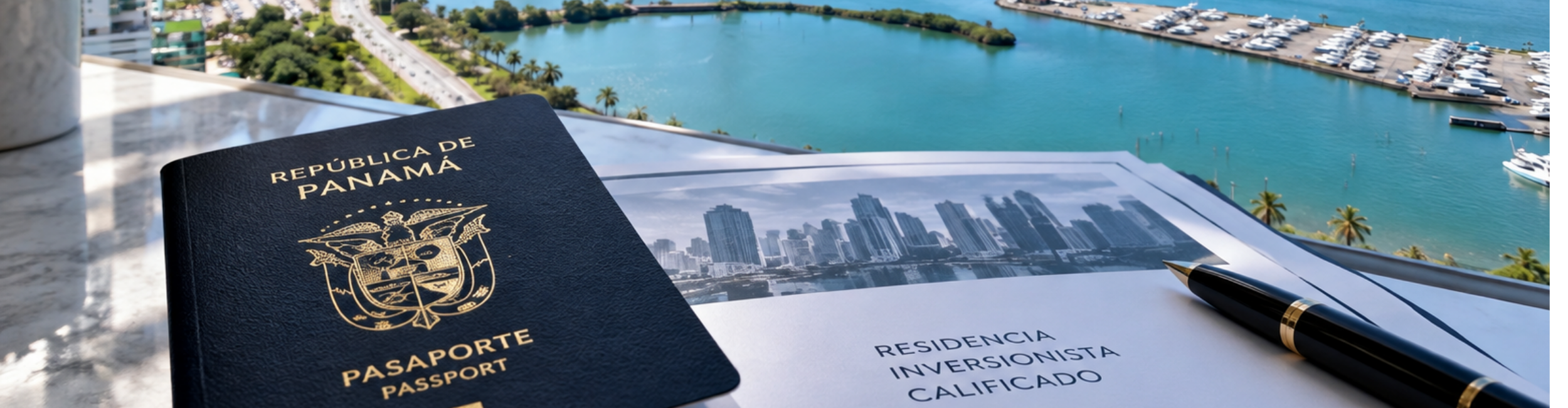
Panama has introduced an important change to the taxation of new residential real estate.
On August 31, 2026, Law 546 was enacted, modifying Panama’s Real Estate Transfer Tax, known as the Impuesto de Transferencia de Bienes Inmuebles (ITBI).
The new law provides an exemption on the first B/.120,000 (US$120,000) of the taxable base for qualifying first sales of new residential properties. It also introduces preferential tax rates for qualifying homes with taxable bases between B/.120,000 and B/.200,000.
For homebuyers, investors, developers and property owners, the change can materially reduce the transfer-tax cost associated with certain new homes in Panama.
However, the law has specific requirements, and the exemption should not be confused with a general elimination of property transfer tax.
What Does Panama’s Law 546 Change?
Under Panama’s general tax framework, the Real Estate Transfer Tax is normally levied at 2% on taxable property transfers.
Law 546 creates a specific benefit for the first sale of a new residential property.
For a transaction that meets the conditions established by the law, the first B/.120,000 of the taxable base is exempt from ITBI.
This means that the benefit is connected to the first sale of the property as a new residence.
It does not mean that every property priced below B/.120,000 is automatically exempt, and it should not be interpreted as a general exemption for resale properties.
Buyers should therefore look at the complete financial structure of a transaction rather than focusing on a single tax. Our guide to the real cost of owning property in Panama explains other expenses that buyers and owners should consider.
Which Properties Can Qualify?
The benefit under Law 546 applies to qualifying new residential properties when the transaction represents the property’s first sale.
For the standard rule to apply, the sale must be formalized within two years from the date on which the occupancy permit was issued by the competent authority.
The distinction between a property's first sale and a buyer's first property is important.
Law 546 is structured around the first sale transaction of the new residence. It should therefore not automatically be interpreted to mean that the purchaser must be buying a home for the first time in their life.
That difference may be particularly relevant for investors or existing homeowners considering newly constructed residential property.
How Does the B/.120,000 Exemption Work?
For a qualifying transaction, the first B/.120,000 of the applicable taxable base is exempt from ITBI.
When the taxable base exceeds B/.120,000 but does not exceed B/.200,000, the tax is calculated only on the portion above B/.120,000.
Law 546 establishes the following preferential rates:
More Than B/.120,000 and Up to B/.130,000
Applicable rate on the amount exceeding B/.120,000:
0.50%
More Than B/.130,000 and Up to B/.150,000
Applicable rate on the amount exceeding B/.120,000:
1.00%
More Than B/.150,000 and Up to B/.170,000
Applicable rate on the amount exceeding B/.120,000:
1.40%
More Than B/.170,000 and Up to B/.190,000
Applicable rate on the amount exceeding B/.120,000:
1.60%
More Than B/.190,000 and Up to B/.200,000
Applicable rate on the amount exceeding B/.120,000:
1.80%
A key point is that moving into a higher price bracket does not remove the B/.120,000 exemption.
The preferential rate applies only to the portion of the taxable base exceeding the exempt amount.
Practical Examples of the New ITBI Calculation
Several simplified examples help illustrate how the system works.
New Home With a Taxable Base of B/.120,000
Exempt amount: B/.120,000
Taxable amount: B/.0
ITBI: B/.0
New Home With a Taxable Base of B/.150,000
Exempt amount: B/.120,000
Remaining taxable amount: B/.30,000
Applicable rate: 1.00%
ITBI: B/.300
New Home With a Taxable Base of B/.180,000
Exempt amount: B/.120,000
Remaining taxable amount: B/.60,000
Applicable rate: 1.60%
ITBI: B/.960
New Home With a Taxable Base of B/.200,000
Exempt amount: B/.120,000
Remaining taxable amount: B/.80,000
Applicable rate: 1.80%
ITBI: B/.1,440
These examples demonstrate how substantially the new structure can reduce the transfer-tax burden on qualifying new residential properties.
What Happens When the Property Is Worth More Than B/.200,000?
An important feature of Law 546 is that the exemption does not automatically disappear when the taxable base exceeds B/.200,000.
For qualifying first sales of new residential properties above this threshold, the first B/.120,000 remains exempt.
The amount exceeding B/.120,000 is then subject to the general ITBI regime rather than the preferential rate schedule applicable to properties up to B/.200,000. Panama’s Ministry of Economy and Finance specifically explained this treatment when presenting the legislation.
For example, assuming a qualifying taxable base of B/.300,000:
B/.300,000 − B/.120,000 exemption = B/.180,000
B/.180,000 × 2% = B/.3,600
This means that Law 546 can also have an effect on higher-value new residential properties.
The Taxable Base Is Not Necessarily the Advertised Price
Another important point is that the law refers to the taxable base, not simply to the asking price displayed in a real estate advertisement.
The applicable tax base is determined under Panama’s property-transfer tax rules and may depend on the legal and fiscal characteristics of the specific transaction.
For that reason, the precise ITBI calculation should always be confirmed before closing.
Professional legal review remains an essential part of buying real estate in Panama. Buyers unfamiliar with the process can read our guide explaining why a real estate lawyer is important when buying property in Panama.
Who Is Legally Responsible for the ITBI?
Law 546 also reinforces an important protection regarding responsibility for the tax.
Where the ITBI obligation legally corresponds to the seller, a contractual provision requiring the buyer to pay, reimburse or assume that seller’s tax obligation is considered invalid.
This is important because buyers should clearly understand which closing costs legally belong to each party before signing a purchase agreement.
Purchase contracts should therefore be reviewed carefully rather than assuming that every cost presented during a transaction is automatically the buyer’s responsibility.
What Information Must Be Included in the Public Deed?
To benefit from the exemption, the seller must declare under oath in the public deed that the property meets the conditions established by the law.
The documentation must establish that the residence is new, that the transaction represents its first sale and that the sale is being formalized within the applicable period following issuance of the occupancy permit.
The occupancy permit information must also be identified in the public deed.
The law simplifies the process by eliminating the need for a separate ITBI exclusion certificate from the Dirección General de Ingresos for qualifying transactions.
Nevertheless, the application of the exemption must still be properly reported through the procedures established by Panama’s tax authority.
Incorrect or false declarations may lead to collection of unpaid tax together with applicable interest, surcharges and other possible sanctions.
What About Recently Completed Properties With Older Occupancy Permits?
Law 546 also contains an important transitional provision.
Certain new residential properties whose occupancy permits were issued before the law entered into force may still qualify.
In these cases, the first sale must be formalized after the law becomes effective and within 30 months from the date on which the occupancy permit was issued, provided that the other legal requirements are satisfied.
Transactions completed before the new law became effective remain governed by the rules that applied at the time they were formalized.
This transitional provision may be particularly relevant to buyers evaluating recently completed residential projects already holding occupancy permits.
Does Law 546 Apply to Resale Properties?
Generally, no.
The exemption is specifically connected to the first sale of a new residential property.
A later resale of the same property does not fall under this particular benefit and remains subject to the applicable general tax rules.
This is an important distinction in Panama City, where buyers often compare new developer inventory with apartments and condos available on the resale market.
Neither option is automatically superior.
New construction may offer tax or financing advantages, while a resale property may provide a stronger location, larger floor plan, established building administration, more attractive purchase price or better investment economics.
Our 2026 guide to apartments and condos for sale in Panama City explains these considerations in greater detail.
What Could Law 546 Mean for Panama’s Real Estate Market?
The Panamanian government has presented the measure as a way to facilitate access to new housing while supporting construction, private investment and employment.
From a real estate perspective, lower transaction costs can improve the financial attractiveness of certain new residential properties.
However, a tax benefit alone should never determine whether a property is a good purchase.
Buyers should still evaluate:
- purchase price;
- location;
- construction and building quality;
- monthly maintenance costs;
- rental demand;
- potential resale value;
- financing conditions;
- legal due diligence; and
- their individual investment or lifestyle objectives.
A tax incentive can improve the economics of a well-selected property. It cannot make an overpriced or poorly located property a good investment.
What Buyers Should Verify Before Purchasing
Anyone expecting to benefit from Law 546 should confirm that the specific transaction satisfies the legal requirements before signing and closing.
In particular, buyers and their legal advisers should verify:
- that the property qualifies as a new residence;
- that the transaction represents its first sale;
- the date of the occupancy permit;
- whether the applicable deadline has been satisfied;
- the correct taxable base;
- the applicable ITBI treatment; and
- that the public deed correctly reflects the required information.
These checks should form part of the normal legal due-diligence process.
Final Perspective
Law 546 represents a meaningful change to the cost structure surrounding the purchase of new residential property in Panama.
For qualifying transactions, the first B/.120,000 of the taxable base is exempt from ITBI, while preferential rates apply to the excess for qualifying properties with taxable bases of up to B/.200,000.
For qualifying properties above B/.200,000, the first B/.120,000 exemption remains in place, while the remaining taxable amount falls under the general ITBI regime.
The law may therefore reduce transaction costs for a broad range of new residential purchases.
However, taxes remain only one component of a successful real estate decision.
At Panama Home Realty, we believe buyers should understand the property, the price, the legal structure and the complete financial implications of a transaction before making a final decision.
Relevant service
Legalservices
We can guide and assist you with the whole process of obtaining a property, open bank account, getting a mortgage, loan, visa and many more!
About this service
Over 20 years of experience in real-estate
With extensive knowledge of the local market, we provide insights to help you make informed decisions.
We try our best to be as transparent as possible with all of our services, offering free consultancy to better understand your needs.
From helping you making your first move in real-estate market, to hands-free management of your properties. All under one roof.