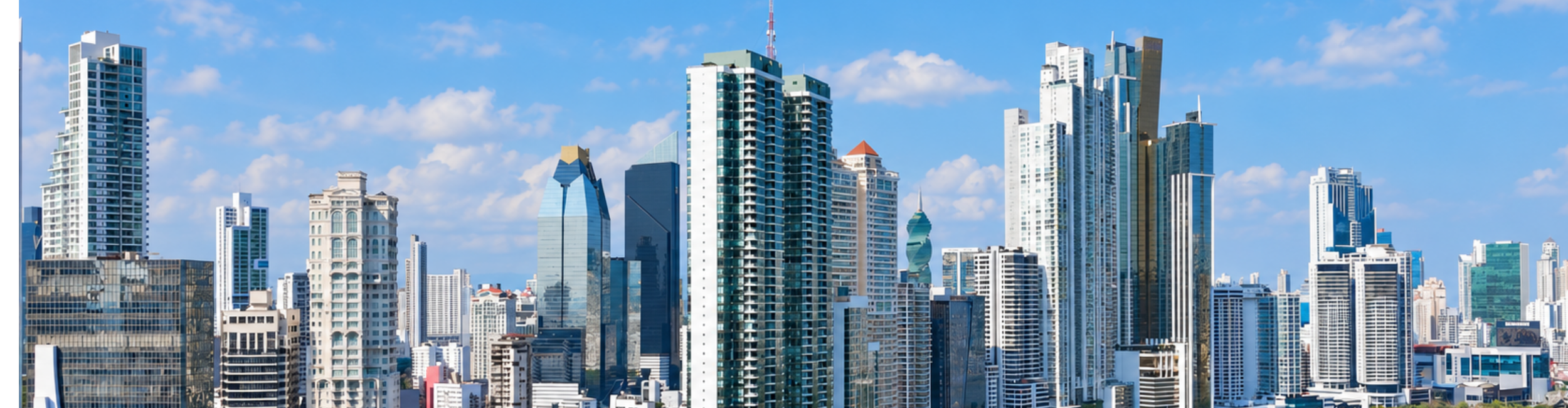
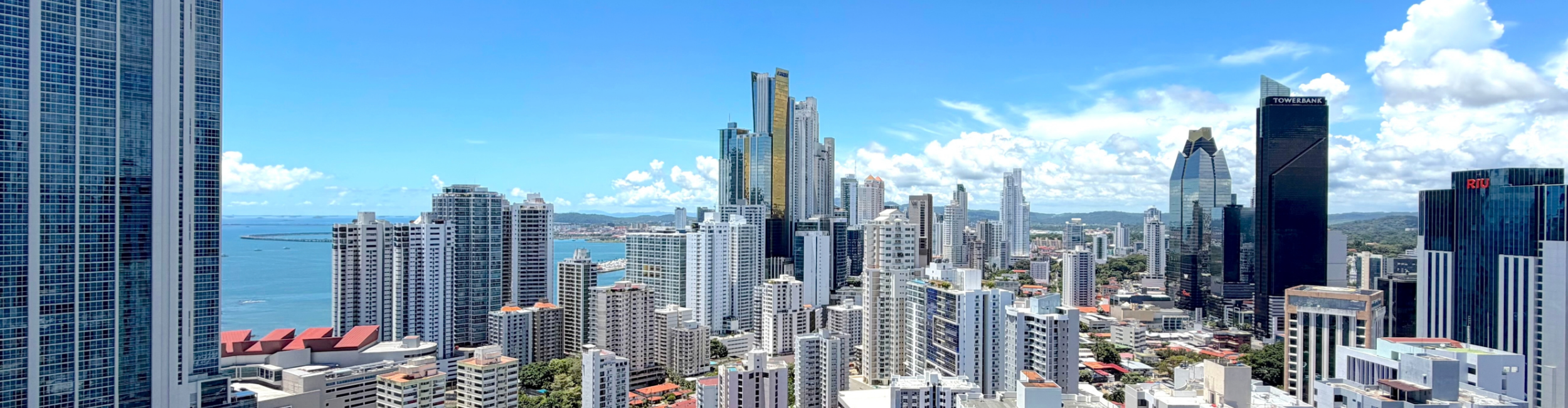
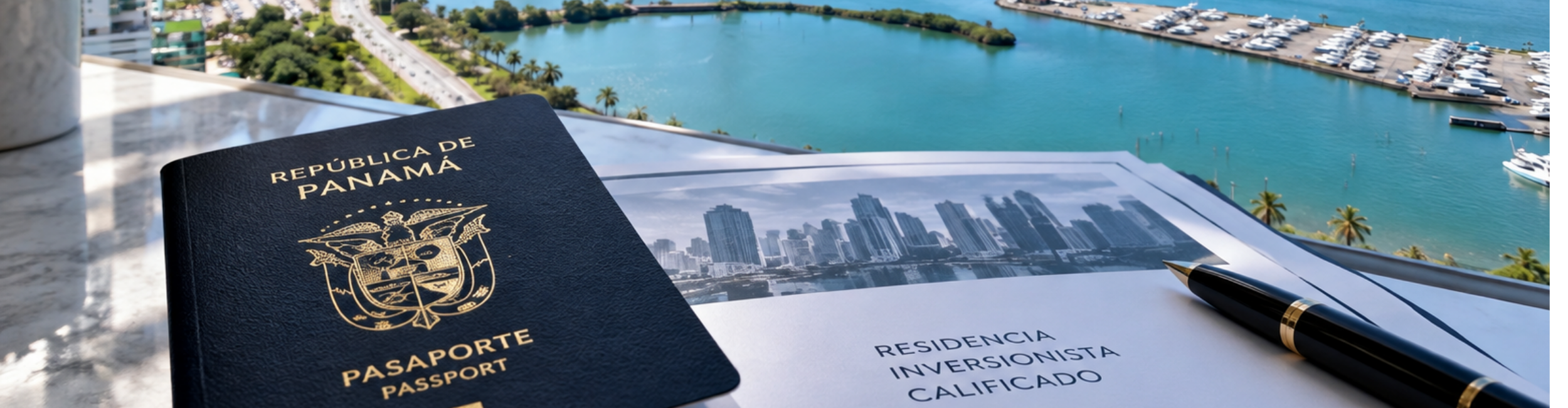
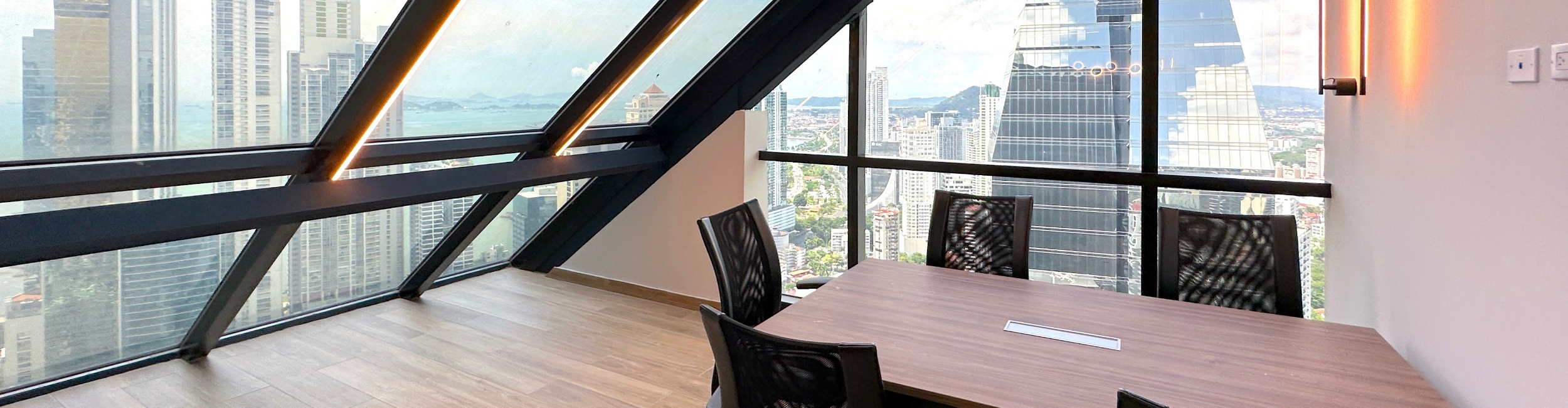
The Panama real estate market in 2026 is not defined by one dramatic change.
What we are seeing instead is a more mature, selective, and demanding market — one in which buyers are asking better questions, sellers need to be more realistic about pricing, and professional preparation matters more than ever.
At Panama Home Realty, our perspective comes from working directly with buyers, sellers, investors, tenants, and property owners across Panama City.
That gives us a view of the market that goes beyond asking prices and online listings.
We see what buyers actually request.
We see which properties generate serious interest.
We see where negotiations succeed or fail.
We see what happens after investors purchase properties and place them into the rental market.
And we see which problems could often have been avoided with better preparation from the beginning.
So far, 2026 has reinforced an important principle:
Panama continues to offer attractive real estate opportunities, but buyers and sellers increasingly need strategy, realistic expectations, and professional guidance to achieve strong results.
2026 Is a More Selective Real Estate Market
One of the clearest trends we have observed is that buyers are becoming more selective.
International buyers today often begin researching Panama months before they arrive.
They study neighborhoods, compare properties online, watch real estate videos, research companies and agents, read reviews, evaluate asking prices, and arrive with considerably more information than buyers did in the past.
This is positive.
But having more information does not always mean understanding the market better.
Online listings can tell buyers what owners are asking.
They cannot always explain:
- what a property is realistically worth
- why two similar apartments have very different prices
- whether a building has recurring problems
- how strong the rental demand actually is
- whether a property is easy to resell
- what renovation may be required
- whether an apparent bargain is genuinely good value
In 2026, access to information is easy.
Interpreting that information correctly is where professional market experience becomes valuable.
For buyers who want a deeper understanding of individual buildings, neighborhoods, pricing, and the purchase process, our 2026 guide to apartments and condos for sale in Panama City provides a broader framework.
Buyers Are Asking Better Questions
We consider this one of the healthiest developments in the market.
Serious buyers are increasingly moving beyond questions such as:
“What is the lowest price?”
or:
“How much can I negotiate?”
Instead, many are asking:
- What is realistic rental demand in this building?
- How easy will this property be to resell?
- What are the actual monthly ownership costs?
- Is the asking price supported by the market?
- What condition is the building really in?
- Is there a large amount of competing inventory?
- What type of tenant would rent this apartment?
- What could affect the property five or ten years from now?
These are much stronger questions.
A property should not be evaluated only according to how attractive it looks during a viewing.
The building, location, price, operating costs, rental market, future supply, layout, condition, and exit potential all matter.
This is particularly important in Panama City because properties that appear similar online may perform very differently over time.
Asking Price and Market Value Are Not the Same Thing
This remains one of the most important lessons for both buyers and sellers in 2026.
An owner can ask any price for a property.
The market ultimately determines whether buyers agree.
Some properties are positioned realistically and generate serious interest relatively quickly.
Others remain available for extended periods because the owner's expectations are disconnected from what qualified buyers are prepared to pay.
This distinction matters because buyers sometimes make the opposite mistake as well.
They may assume that receiving a large discount automatically means they negotiated a good deal.
It does not.
If a property was substantially overpriced from the beginning, a large discount may simply bring the price closer to reality.
Smart buyers should therefore focus less on the percentage negotiated from the asking price and more on the relationship between the final purchase price and the property's actual value.
The same principle applies to sellers.
A realistic initial price can create competition and stronger negotiating conditions.
An unrealistic price can cause a good property to become stale on the market.
Good Properties Still Attract Attention
A selective market does not mean buyers have stopped buying.
It means they are becoming more discriminating about what they buy.
Well-located properties with good layouts, attractive views, sensible operating costs, solid building quality, and realistic pricing continue to attract attention.
This is an important distinction.
There is always inventory available in Panama City.
But there is not always a large supply of properties where price, location, condition, building quality, and future potential come together at the same time.
That is why buyers who are genuinely prepared sometimes need patience — and at other times need to act decisively.
A good opportunity does not become better simply because a buyer waits another six months.
But a mediocre property does not become a good investment simply because the buyer is ready to purchase today.
Investors Are Looking More Closely at the Numbers
Another important development in 2026 is greater attention to the financial reality of investment properties.
For years, some real estate marketing has focused heavily on headline rental yields, appreciation projections, or optimistic return scenarios.
Experienced investors generally look deeper.
They want to understand:
- realistic acquisition cost
- achievable monthly rent
- condominium fees
- vacancy
- repairs and maintenance
- furnishing costs
- property management
- insurance
- taxes where applicable
- future capital expenditure
- eventual resale potential
This is exactly how an investment property should be analyzed.
Gross rent is not profit.
And a beautiful apartment is not automatically a good investment.
In our experience, a strong property investment is usually determined by the combination of purchase price, location, realistic rental demand, operating expenses, building quality, and resale potential.
We explore this methodology in greater detail in How to Know If a Panama City Condo Is Actually a Good Investment Before You Buy.
Prime Areas Remain Important — But Building Selection Matters Just as Much
International buyers continue to show strong interest in established Panama City areas such as Costa del Este, Punta Pacifica, Avenida Balboa, Santa Maria, Punta Paitilla, San Francisco, and other well-positioned residential sectors.
But choosing the neighborhood is only the beginning.
Within the same area, there can be substantial differences between buildings.
Age, construction quality, administration, maintenance, layouts, views, amenities, condominium fees, parking, surrounding development, and available inventory can all affect long-term value.
For this reason, we increasingly encourage buyers to think in terms of micro-markets rather than simply neighborhoods.
Saying “I want to buy in Punta Pacifica” is a starting point.
The more important question is:
Which building, which unit, at what price, and for what objective?
That is where much of the real analysis begins.
Lifestyle Buyers and Investors Should Not Use the Same Criteria
Panama attracts buyers for very different reasons.
Some are moving permanently.
Others are retiring.
Some want a second residence for several months each year.
Others are looking primarily for rental income or long-term capital preservation.
These buyers should not evaluate property in exactly the same way.
A family may prioritize space, schools, parking, privacy, and daily convenience.
A retiree may care more about healthcare access, walkability, security, views, and ease of maintenance.
An investor may focus primarily on tenant demand, price, operating cost, rental yield, and future resale liquidity.
A property can therefore be excellent for one buyer and completely inappropriate for another.
This is why we believe good real estate advice begins with understanding the client's objective — not with sending listings.
Financing Requires More Preparation
Financing remains an important part of the market, particularly for buyers who prefer not to commit the full purchase price in cash.
But financing should be addressed early.
Buyers should understand that the mortgage process, particularly for foreign buyers, may require extensive financial documentation and additional time.
More importantly, investment buyers should be careful not to assume that rental income will automatically cover the full cost of highly leveraged ownership.
A property may generate attractive rent while still requiring additional monthly cash once mortgage payments, condominium fees, maintenance, vacancies, insurance, management, and other expenses are included.
Financing can be useful.
But the structure needs to make sense.
In our view, the financing decision should be part of the investment analysis from the beginning, not something addressed only after the buyer finds a property.
Sellers Need to Adapt to Better-Informed Buyers
The change in buyer behavior is also affecting sellers.
Today's buyer can compare a property against competing inventory almost immediately.
This means that sellers need more than attractive photography and a high asking price.
They need positioning.
A professionally represented property should have:
- realistic pricing
- accurate information
- quality photography and video
- broad digital visibility
- responsive communication
- organized documentation
- a clear negotiation strategy
Overpricing remains one of the easiest ways to weaken a property's position.
Owners sometimes believe they can begin at an ambitious price and reduce it later if necessary.
In reality, the strongest period of attention often occurs when a property first enters the market.
If that initial exposure is wasted at an unrealistic price, recovering buyer attention later can be more difficult.
Online Reputation Has Become Part of the Real Estate Decision
Another change we continue to see is how international clients select the professionals they want to work with.
Years ago, a buyer arriving in Panama might have depended heavily on a referral or contacted whichever broker responded first.
Today, many clients investigate the company before making contact.
They review:
- Google Reviews
- the company website
- property inventory
- educational articles
- YouTube
- social media
- the experience of the team
- consistency of information across platforms
This has changed the real estate business.
A strong digital presence is no longer simply marketing.
For international clients, it is often part of the due diligence they perform on the company that may eventually represent them in a significant financial transaction.
We believe this is positive for the industry because it creates greater pressure for professional firms to be transparent, visible, consistent, and accountable.
Property Management Is Becoming More Important to International Owners
Closing the purchase is only one part of property ownership.
For international owners, the more difficult question often begins afterward:
Who will take care of the property when I am not in Panama?
Owners may need assistance with:
- finding and screening tenants
- rent collection
- inspections
- repairs
- air-conditioning maintenance
- plumbing or electrical problems
- condominium administration
- monthly expenses
- tenant communication
- preparing the property between leases
This operational side of real estate can significantly affect the real return and overall ownership experience.
It can also provide valuable information before buying.
A company that manages properties sees things a transaction-only broker may never see: which buildings generate recurring maintenance issues, what tenants actually request, which layouts rent easily, what owners spend after closing, and which problems appear repeatedly over time.
For international owners who want to understand this side of ownership, our guide to professional property management in Panama City explains our approach in greater detail.
Not Every Challenge Comes From the Property
One of the recurring lessons from real estate transactions is that the apartment itself may be only one part of the equation.
Transactions can also be affected by:
- incomplete documentation
- financing delays
- unrealistic expectations
- poor communication
- legal issues
- slow responses between parties
- unresolved property obligations
- last-minute changes in transaction structure
This leads to a principle we have repeated internally for years:
Every real estate transaction moves only as fast as its weakest link.
An excellent property does not guarantee an excellent transaction.
The quality of the broker, attorney, bank, documentation, buyer preparation, seller cooperation, and overall coordination can all matter.
For serious transactions, the professional team surrounding the property is almost as important as the property itself.
The Best Advisors Sometimes Recommend Waiting
Real estate companies make money when transactions close.
That creates an obvious temptation to push clients toward a purchase.
We believe this is short-sighted.
There are times when the appropriate recommendation is:
Do not buy this property.
And there are times when the correct advice is:
Wait. We can find something better.
Not every property is a good opportunity.
Not every asking price deserves an offer.
And not every buyer needs to complete a transaction immediately.
Long-term client trust is more valuable than forcing a transaction that does not make sense.
This philosophy is particularly important with investors, because a poor purchase can affect returns for many years after the commission from the transaction has been forgotten.
What 2026 Is Teaching Buyers
For buyers, the lessons we see so far in 2026 are relatively clear.
Understand what you are trying to accomplish before choosing a property.
Do not confuse asking price with value.
Compare buildings, not just neighborhoods.
Understand the full cost of ownership.
Prepare financing early if you need it.
Work with professionals who are willing to discuss risks as openly as opportunities.
And when the right combination of property, location, condition, and price appears, be prepared to make a decision.
What 2026 Is Teaching Sellers
For sellers, preparation is equally important.
The market does not automatically reward the highest asking price.
It rewards properties that buyers perceive as offering the strongest combination of value, condition, location, presentation, and transaction certainty.
Good representation should therefore begin before the property is published.
Pricing, presentation, documentation, marketing, and negotiation strategy should work together.
In an environment where buyers have access to enormous amounts of information, unrealistic positioning becomes increasingly visible.
What 2026 Is Teaching Investors
Investors should remain focused on fundamentals.
Do not purchase simply because Panama is growing.
Do not purchase simply because a development is new.
Do not purchase simply because somebody promises an attractive return.
Analyze the actual property.
Analyze the building.
Analyze the location.
Analyze realistic rental demand.
Understand costs.
Think about who will eventually buy the property from you.
And above all, recognize that the investment is usually made at the moment of purchase.
A strong acquisition creates options.
A weak acquisition can require years of market appreciation just to correct the original mistake.
Where Panama Home Realty Is Focusing in 2026
Our objective in 2026 is not uncontrolled expansion.
We continue to focus on strengthening the areas of the business that directly affect client outcomes:
- professional property representation
- buyer and investor advisory
- quality property inventory
- stronger market analysis
- property management
- digital visibility
- educational content
- efficient internal systems
- long-term client relationships
We believe the future of professional real estate in Panama will increasingly reward companies that combine market experience with transparency, technology, strong operations, and long-term accountability.
A real estate company should not disappear when a transaction closes.
For many clients, particularly international owners and investors, that is when the long-term relationship actually begins.
Looking Ahead
It is still too early to write the final story of Panama real estate in 2026.
But the direction we see is clear.
Buyers are better informed.
Sellers need to be more realistic.
Investors are analyzing numbers more carefully.
Professional representation matters more.
And the difference between an average property and a strong opportunity is becoming increasingly important.
We see that as a healthy evolution of the market.
Panama does not need buyers who purchase simply because they have been sold a story.
It benefits from buyers who understand what they are purchasing, sellers who understand realistic market value, and professionals who are prepared to guide both sides responsibly.
That creates stronger transactions and, ultimately, a stronger real estate market.
Final Thought
Real estate markets change.
The principles behind strong decisions do not.
Buy at the right price.
Understand what you own.
Know why you are buying.
Work with experienced professionals.
Protect the downside before focusing on the upside.
And never allow pressure to replace analysis.
That is the approach we continue to believe in at Panama Home Realty — and so far, 2026 has only reinforced it.
About Panama Home Realty
Panama Home Realty is a Panama real estate company specializing in residential sales, rentals, property management, and investment advisory.
Our team works with local and international buyers, sellers, investors, landlords, and tenants throughout Panama City, combining transaction experience with the long-term perspective that comes from managing properties after the purchase is complete.
Mojmir Sokola
Vice President
Panama Home Realty
Relevant service
Promoteyour property
Your property can be listed on our website and social media! We will even provide professional photos, video and 360 captures without any additional fee.
About this service
Over 20 years of experience in real-estate
With extensive knowledge of the local market, we provide insights to help you make informed decisions.
We try our best to be as transparent as possible with all of our services, offering free consultancy to better understand your needs.
From helping you making your first move in real-estate market, to hands-free management of your properties. All under one roof.