On October 9, 2026, Panama faced one of the strongest earthquakes in its modern recorded history. Buildings swayed, residents rushed to safety, and the country's infrastructure faced an extraordinary test.
The magnitude 7.7 earthquake left a lasting impression on millions of people.
But when the shaking stopped, one powerful image emerged from the capital:
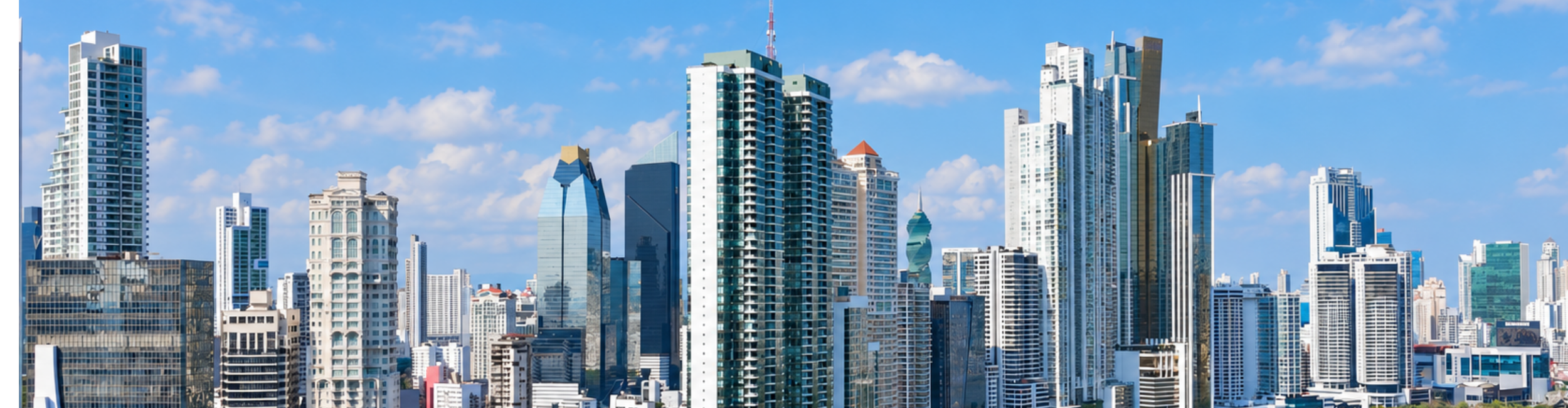
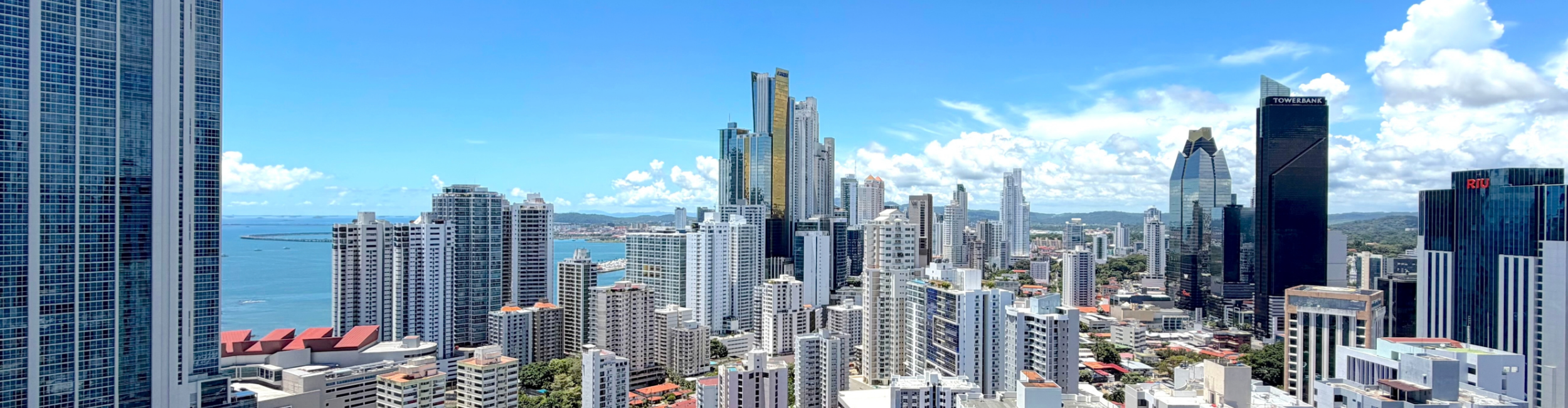
Panama City's modern skyline was still standing.
For a country that has transformed its capital into one of Latin America's most recognizable high-rise cities, this was an encouraging moment.
It also raised an important question for international property buyers:
What does this earthquake reveal about Panama's building standards, structural resilience, and long-term real estate investment?
Panama's 7.7 Earthquake: A Historic Test
According to the United States Geological Survey (USGS), the earthquake struck on October 9, 2026, at approximately 12:56 p.m. local time.
The magnitude 7.7 event occurred at a depth of approximately 12.6 kilometers, with its epicenter roughly 200 kilometers from Panama City.
It was followed by numerous aftershocks, including another powerful earthquake measuring magnitude 6.6.
The consequences were serious. Hundreds of homes and schools were damaged, along with roads, bridges, healthcare facilities, and historic structures, particularly in central Panama.
At least 27 people were injured, although no fatalities had been confirmed as of October 10.
Our thoughts are with everyone affected, especially the families and communities facing the difficult process of recovery.
Yet the initial situation in Panama City revealed another important story: despite the intense shaking experienced by residents, there were no widespread reported collapses of modern residential skyscrapers.
Panama City's Modern Skyline: Built for a Different Era
Over the past two decades, Panama City has undergone a remarkable transformation.
What was once a relatively modest skyline has become a landscape of modern condominium towers, luxury residences, and architecturally ambitious developments.
Neighborhoods such as Punta Pacífica, Costa del Este, Avenida Balboa, and San Francisco now represent some of the capital's most established high-rise residential communities.
Many of these towers did not exist during Panama's earlier major earthquakes.
October 9, 2026, therefore became an important real-world event for understanding how the city's newer generation of buildings responds to seismic activity.
Residents on higher floors reported prolonged swaying, vibrations, and unsettling sounds as structures responded to the earthquake.
While frightening, this movement is not necessarily evidence of structural failure.
Modern skyscrapers are engineered to accommodate certain levels of movement caused by wind and seismic forces. Their structural systems are designed to distribute loads and reduce the risk of catastrophic failure.
A building that moves is not automatically a building that is failing.
However, remaining standing does not prove that a structure is undamaged. Only professional inspections can establish the condition of individual buildings.
The initial absence of widespread reported high-rise collapses in the capital remains encouraging, but it must be understood in context: seismic intensity varies significantly with distance, local ground conditions, and other factors.
The Engineering Behind Panama's Modern Buildings
One of Panama's important strengths is the existence of an established structural engineering regulatory framework.
The Reglamento Estructural Panameño (REP) sets technical requirements for the design of buildings, including resistance to seismic forces.
These regulations have evolved as engineering knowledge and construction practices have advanced.
The REP-2021 framework, adopted in 2022 and implemented beginning in 2023, represents a more recent stage in Panama's structural design standards.
Buildings constructed before its implementation were subject to earlier regulations, and individual construction quality must always be evaluated separately.
Earthquake-resistant engineering does not mean a building is indestructible. It means designing structures to improve their response to seismic forces and reduce risks to human life.
Behind Panama City's skyline are generations of architects, structural engineers, builders, and construction professionals whose work deserves recognition.
The earthquake is also a reminder that engineering standards, responsible construction, and long-term maintenance are essential to the future of modern urban development.
What Does This Mean for Real Estate Investors in Panama?
The October 2026 earthquake highlights a frequently overlooked aspect of property investment.
Investors naturally focus on location, ocean views, rental income, capital appreciation, and luxury amenities.
But a property's long-term value also depends on the quality and condition of the building itself.
For buyers exploring apartments for sale in Punta Pacífica, or residential properties in Costa del Este, this means looking beyond the apartment's interior.
Before purchasing, investors should consider:
-
Structural design and construction history: Which building standards applied when the property was developed?
-
Engineering inspections: Are relevant technical assessments available, particularly following the earthquake?
-
Building maintenance: How effectively does the administration maintain the property's structural and mechanical systems?
-
Insurance protection: Does the property have appropriate earthquake-related coverage?
-
Long-term asset quality: Is the building supported by responsible management, adequate maintenance funding, and reliable documentation?
A professionally managed building with appropriate engineering documentation may provide investors with greater confidence when evaluating long-term ownership risks.
A successful real estate investment is not just about what a property can earn. It is also about how well that asset can be protected.
Is Panama Safe to Live In and Invest In After the Earthquake?
This is one of the most important questions international buyers may now ask.
Panama remains an established destination for international residents, businesses, and property investors. However, no country exposed to seismic activity can promise complete protection from future earthquakes.
A powerful earthquake also does not mean another major event cannot happen for decades.
The most meaningful question is not whether Panama will ever experience another earthquake.
It is how effectively its buildings, infrastructure, regulations, and communities are prepared for seismic risks.
The October 2026 earthquake provides an opportunity to evaluate these questions using real-world evidence.
And while the absence of widespread reported modern high-rise collapses in Panama City is encouraging, the full assessment must be based on professional engineering findings, not appearances alone.
For investors, informed due diligence remains essential.
A Defining Moment for Panama's Real Estate Future
When the earthquake struck, Panama City's skyline experienced an extraordinary moment.
When the shaking ended, its towers remained a powerful symbol of a modern capital that has spent decades growing, building, and transforming.
That image deserves attention. So do the people affected elsewhere in the country, and the engineers whose future assessments will help explain how Panama's buildings actually performed.
For Panama Home Realty, the lesson reinforces a principle we have followed since 2012:
Real estate is about more than buying an apartment. It is about understanding the quality, value, and long-term potential of the property behind the investment.
Our experience across Panama City's leading residential neighborhoods helps us guide buyers beyond the initial property search and toward more informed decisions.
As Panama continues to recover and learn from this historic event, one thing is clear:
The true strength of a real estate investment begins long before the keys change hands.
Explore our selection of properties for sale in Panama, including apartments and condos in the capital's most established residential neighborhoods.
Panama Home Realty
Because true luxury begins long before the keys change hands.
Sources and References
Editorial note: Published October 10, 2026. Information reflects preliminary official and media reporting. Structural assessments and damage evaluations are ongoing. This article does not certify the seismic performance or safety of any individual building.
Relevant service
Propertymanagement
Panama Home Realty offers Property Management services, in charge of fulfilling the needs of both the property owners and residents in apartments under our management.
About this service
Over 20 years of experience in real-estate
With extensive knowledge of the local market, we provide insights to help you make informed decisions.
We try our best to be as transparent as possible with all of our services, offering free consultancy to better understand your needs.
From helping you making your first move in real-estate market, to hands-free management of your properties. All under one roof.