Is owning a home always the smartest financial decision? Or could renting while investing your capital leave you in a stronger position ten years from now?
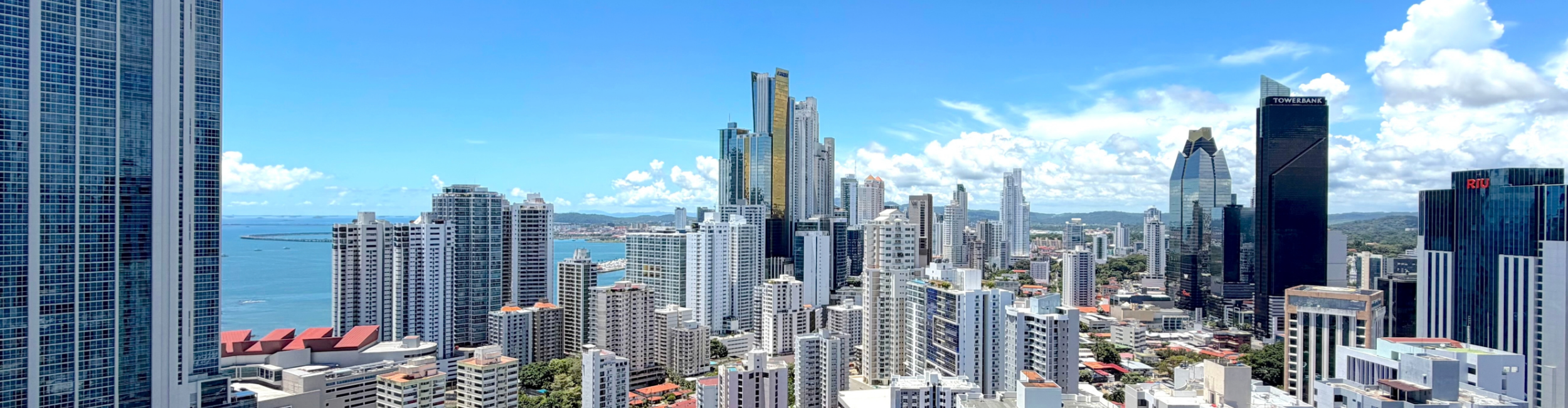
Imagine two families living in comparable apartments in Panama City.
One purchases a $250,000 apartment with a 30-year mortgage. The other rents a similar property, invests the money that would have gone toward the down payment, and maintains greater financial flexibility.
Both families enjoy a similar lifestyle. Both make thoughtful financial decisions.
Yet ten years later, their financial positions could be very different.
The homeowner may have accumulated substantial property equity and benefited from appreciation. The renter may have built a diversified investment portfolio while preserving access to capital.
Which family made the better decision?
The answer depends on much more than the monthly mortgage or rental payment.
At Panama Home Realty, we believe that deciding whether to rent or buy should begin with a realistic understanding of financing costs, property values, investment opportunities, and long-term personal priorities.
Renting vs. Buying: Why the Traditional Argument Is Incomplete
For generations, homeownership has been associated with financial security, while renting has often been described as throwing money away.
But housing and investing are not exactly the same decision.
When you rent, you pay for accommodation, location, amenities, and flexibility without acquiring ownership.
When you buy, you acquire an asset that may appreciate, but you also commit capital and accept financing costs, maintenance responsibilities, and market risks.
A mortgage payment includes both interest and principal. Interest is a financing expense; principal repayment reduces debt and builds equity.
Renters do not accumulate property equity, but they may invest the capital they would otherwise have spent on buying.
The important question is not simply whether you own a property. It is how your decision affects your overall financial position.
What Does a $250,000 Apartment Really Cost with a Mortgage in Panama?
Let's examine a hypothetical apartment priced at $250,000.
For this calculation, we assume a 20% down payment, a 30-year mortgage, and a constant annual interest rate of 7.5%.
The rate reflects Banco General's published January 2026 schedule for certain new residential properties outside the preferential-interest program. Actual mortgage conditions vary by bank, borrower, and property.
Mortgage Cost Breakdown
| Financial detail | Amount |
|---|---|
| Apartment price | $250,000 |
| Down payment (20%) | $50,000 |
| Mortgage principal | $200,000 |
| Annual interest rate | 7.5% |
| Mortgage term | 30 years |
| Monthly principal and interest | $1,398 |
| Total mortgage payments | $503,434 |
| Total interest over 30 years | $303,434 |
Illustrative fixed-rate amortization model, with monthly payments over 360 months. Figures are rounded. Insurance, bank fees, taxes, and ownership costs are excluded.
The figures reveal something important: borrowing $200,000 could generate more than $303,000 in interest over the full mortgage term.
However, that does not mean the entire amount is lost.
The borrower also repays the original principal, acquires ownership, and may benefit from rising property values.
The distinction between interest expenses and equity accumulation is essential.
Why the First Years of a Mortgage Matter
At the beginning of our example, approximately $1,250 of the first $1,398 monthly payment goes toward interest. Only about $148 reduces the outstanding balance.
As the loan progresses, the principal portion increases.
| Mortgage period | Principal repaid | Interest paid | Outstanding balance |
|---|---|---|---|
| 5 years | $10,765 | $73,141 | $189,235 |
| 10 years | $26,410 | $141,401 | $173,590 |
| 20 years | $82,190 | $253,433 | $117,810 |
| 30 years | $200,000 | $303,434 | $0 |
After ten years, the homeowner has paid approximately $167,812 in principal and interest, while reducing the original mortgage balance by about $26,410.
This is why understanding an amortization schedule matters.
A monthly mortgage payment alone does not reveal the true cost of financing.
The Strongest Argument for Buying: Building Equity and Long-Term Stability
High mortgage interest does not automatically make purchasing a poor decision.
Property ownership creates the potential to build wealth through principal repayment and appreciation.
Consider our $250,000 apartment after ten years.
If its market value grows at a hypothetical 3% annually, the property would be worth approximately $335,979.
With an outstanding mortgage of about $173,590, the homeowner would have approximately $162,389 in gross property equity.
That is considerably more than the original $50,000 down payment.
But appreciation is not guaranteed. Property values can stagnate or decline, and gross equity is not the same as profit after acquisition costs, interest, maintenance, taxes, and selling expenses.
A well-selected property can create meaningful wealth. An overpriced or poorly maintained property can produce a disappointing result.
Ownership Also Provides Nonfinancial Benefits
For many families, owning a home provides stability that cannot be expressed entirely in financial returns.
Homeowners generally enjoy greater control over their living space, subject to applicable building rules. They can establish long-term roots without depending on a landlord's lease-renewal decisions.
After the mortgage is repaid, the owner no longer has principal and interest payments, although ownership expenses continue.
For people intending to remain in Panama for many years, these advantages can be particularly valuable.
The Hidden Costs of Ownership in Panama City
A frequent mistake is comparing the monthly rent directly with the mortgage installment.
Suppose a comparable apartment rents for $1,500 per month.
The mortgage payment in our example is approximately $1,398. At first glance, buying looks cheaper.
But homeowners may also pay condominium maintenance fees, insurance, property taxes, repairs, and occasional special assessments.
Illustrative Monthly Comparison
| Expense | Buying | Renting |
|---|---|---|
| Mortgage principal and interest | $1,398 | — |
| Condominium maintenance (PH) | $300 | — |
| Insurance allowance | $100 | — |
| Maintenance reserve | $100 | — |
| Monthly rent | — | $1,500 |
| Total monthly cash outflow | $1,898 | $1,500 |
Illustrative assumptions, not Panama City market averages. Taxes, acquisition and selling expenses, certain bank charges, and exceptional building assessments are excluded. Actual lease arrangements may allocate expenses differently.
The homeowner spends approximately $398 more per month in cash.
But this difference is not the same as an economic loss, because part of the mortgage payment creates equity.
The correct comparison requires looking at both monthly cash flow and long-term net worth.
Why Building Quality Changes the Equation
In Panama City, the building can matter as much as the apartment itself.
Properties in Avenida Balboa, Punta Pacífica, Costa del Este, San Francisco, and other neighborhoods can have significantly different maintenance requirements, building conditions, and resale characteristics.
Buyers should examine not only the purchase price and amenities, but also the condominium administration, financial reserves, maintenance history, and potential major repairs.
A beautiful apartment is not necessarily a good investment if the building carries significant unresolved expenses.
The quality of ownership depends on the property, the building, and the price paid.
What If You Rent and Invest the Down Payment Instead?
Now consider the second family.
Instead of using $50,000 as a down payment, they rent a similar apartment and invest that capital.
Suppose the investment portfolio produces a hypothetical 6% effective annual compound return.
| Investment period | Portfolio value |
|---|---|
| 5 years | $66,911 |
| 10 years | $89,542 |
| 20 years | $160,357 |
| 30 years | $287,175 |
Mathematical illustration, not a guaranteed return. No additional contributions, investment fees, taxes, inflation, or withdrawals are included.
The figures demonstrate the opportunity cost of committing capital to a property.
However, investments carry risks. Their value can decline, and returns may be inconsistent.
Property can also appreciate, so this calculation alone does not determine which option is superior.
Can Investment Income Cover Your Rent?
Some people prefer to preserve their capital and use investment income to support housing expenses.
But the numbers must be realistic.
A $1,500 monthly rent equals $18,000 annually.
| Assumed annual cash yield | Capital needed |
|---|---|
| 4% | $450,000 |
| 5% | $360,000 |
| 6% | $300,000 |
These calculations assume the entire stated yield is distributed as cash before taxes and fees, without deliberately drawing down principal. Capital values and distributions can fluctuate.
A $50,000 portfolio producing a 6% cash yield generates only $3,000 annually — not enough to cover $18,000 in rent.
For investors with substantial capital, rental payments supported by investment income may form part of a broader financial strategy.
The real advantage of renting is the ability to preserve capital, maintain flexibility, and potentially invest elsewhere — not a promise of effortless income.
The Ten-Year Test: Which Family Builds More Wealth?
Let's compare our two households under consistent assumptions.
Both begin with $50,000.
The buyer purchases the $250,000 apartment with a 7.5% mortgage and pays an additional $500 monthly in hypothetical ownership expenses.
The renter pays $1,500 per month, invests the original $50,000, and contributes the approximately $398 monthly difference to the same portfolio.
We assume rent and ownership expenses remain constant and the investment portfolio earns a hypothetical 6% effective annual return.
Results After Ten Years
The renter's initial $50,000 grows to approximately $89,542. Investing the monthly cash-flow difference adds approximately $64,734.
Total hypothetical investment portfolio: $154,277.
The buyer's remaining mortgage is approximately $173,590. The resulting equity depends on the property's market value.
| Annual property appreciation | Buyer's gross equity | Renter's investment portfolio |
|---|---|---|
| 0% | $76,410 | $154,277 |
| 1.5% | $116,545 | $154,277 |
| 3% | $162,389 | $154,277 |
| 4.5% | $214,652 | $154,277 |
Simplified financial model using rounded values. No rent increases, rate changes, taxes, transaction costs, investment fees, or additional unmodeled expenses. Figures compare illustrative asset positions, not after-tax sale proceeds.
At 3% annual property appreciation, the buyer comes out slightly ahead in this model.
With weaker appreciation, the renter's investment portfolio performs better.
With stronger appreciation, ownership becomes more attractive.
The approximate break-even point is 2.75% annual property appreciation under these exact assumptions.
That figure is not a Panama City market forecast. It changes if mortgage rates, rent, ownership expenses, investment returns, or transaction costs change.
The lesson is clear: there is no automatic winner. The financial outcome depends on the property and the circumstances.
The Risk a Mortgage Calculator Cannot Predict: Life Changes
A 30-year mortgage assumes a long-term ability to meet financial obligations.
But careers, relationships, health, and family circumstances can change.
Consider a couple who qualify for a mortgage using both salaries.
Their household budget works comfortably today. But what happens if one person loses their job, they separate, or unexpected medical expenses arise?
A bank's mortgage approval does not guarantee that a household will remain financially comfortable for decades.
Before purchasing, families should consider whether they have sufficient emergency savings and whether their finances could withstand a period of reduced income.
The right mortgage is not necessarily the largest loan a bank will approve.
It is one that remains manageable under realistic circumstances.
A 30-Year Mortgage Does Not Always Require 30 Years of Payments
There is also an important advantage worth recognizing.
Depending on contractual provisions and applicable rules, borrowers may make additional principal payments, refinance, or repay the loan early.
These options can reduce interest costs or change the repayment period.
Buyers should review early repayment conditions, penalties, and any interest-rate adjustment clauses before signing.
When Renting Makes More Sense
Renting can be a particularly sensible choice when:
-
You expect to relocate or are uncertain about your long-term plans.
-
You want to preserve capital for a business or other investments.
-
Comparable properties are significantly cheaper to rent than to own.
-
You want to experience Panama City neighborhoods before purchasing.
-
Your income or family circumstances may change.
Renting offers flexibility, but it also carries risks. Rents may increase, lease conditions may change, and tenants do not accumulate property equity through their payments.
A disciplined renter can build wealth elsewhere. Renting alone does not guarantee that outcome.
Explore apartments and homes for rent in Panama City to compare available options across different neighborhoods and budgets.
When Buying Makes More Sense
Buying may be the stronger choice when:
-
You plan to remain in the property for many years.
-
You have stable income and adequate emergency reserves.
-
The apartment is fairly priced relative to comparable properties.
-
Your mortgage obligations remain comfortable within your budget.
-
You value the permanence and control of homeownership.
-
You can purchase with substantial equity or favorable financing conditions.
Panama also offers preferential-interest mortgage arrangements for certain eligible housing purchases. These programs can change the financial calculation substantially but do not automatically apply to the $250,000 example used here.
Buying outright or with a large down payment also produces very different financing economics from a highly leveraged purchase.
Browse properties for sale in Panama to assess suitable opportunities based on your objectives.
The Panama Home Realty Perspective: The Right Decision Must Survive the Numbers
Since 2012, Panama Home Realty has assisted local and international clients with residential sales, rentals, and property management in Panama.
Working across these services provides a broader perspective on the actual responsibilities of ownership.
A property's value is not determined solely by its purchase price or visual appeal. Building condition, recurring expenses, rental demand, management quality, and resale potential all matter.
For a buyer, a home represents both a place to live and a significant financial commitment.
For a renter, the priority may be finding the right location and lifestyle without restricting future opportunities.
For an investor, the decision requires disciplined consideration of capital, financing, expenses, and risk.
We do not believe every client should buy, just as we do not believe renting is always financially superior.
Our responsibility is to help clients understand their options and identify properties that genuinely suit their circumstances.
Final Thoughts: Financial Freedom Means Making the Right Choice
Owning a home can create long-term wealth, stability, and a sense of permanence.
Renting can preserve flexibility, support liquidity, and allow capital to work in other investments.
Neither path guarantees financial success.
The right decision depends on the price of the property, financing conditions, personal priorities, and the household's ability to manage uncertainty.
A good real estate decision should improve your financial future — not simply fulfill the expectation that everyone must own a home.
At Panama Home Realty, we believe the strongest decisions begin with accurate information, realistic expectations, and professional guidance.
Sometimes that means buying. Sometimes renting. And sometimes waiting until the right opportunity appears.
Considering Renting or Buying in Panama City?
Our team can help you compare available properties, understand local market considerations, and identify an option that fits your lifestyle and financial priorities.
Contact Panama Home Realty to discuss your next move.
Financial disclosure: All calculations are illustrative and do not represent guaranteed financing, property appreciation, or investment returns. The mortgage model assumes $200,000 borrowed at a constant 7.5% nominal annual rate over 360 monthly payments. Investment calculations assume a hypothetical 6% effective annual return, with monthly contributions calculated at an equivalent monthly rate. The comparison excludes several expenses, including transaction costs, property taxes, certain bank fees, and investment fees. Actual results may differ. Readers should obtain independent mortgage, legal, tax, and financial advice.
Research reference: Banco General, published mortgage rates and charges, updated January 2026. Panama's applicable preferential-interest regulations should be verified for each transaction.
Relevant service
Consultingservices
We provide advice and ongoing support on evaluating investment alternatives in the real estate market, whether you buy to live in or to rent.
About this service
Over 20 years of experience in real-estate
With extensive knowledge of the local market, we provide insights to help you make informed decisions.
We try our best to be as transparent as possible with all of our services, offering free consultancy to better understand your needs.
From helping you making your first move in real-estate market, to hands-free management of your properties. All under one roof.